6 MIN READ
Monday, January 5, 2026

Michael Skelly
Founder, Stacker
When you start comparing lovable vs other no-code builders, the core question is whether you want to manage code or manage workflows. Lovable hands you editable source code, which sounds flexible until you realize that means you're responsible for every bug, security update, and infrastructure decision. For most business teams, that's not what you signed up for. You just need working software that you can update safely without a developer on speed dial. That's where managed no-code tools come in, and we'll show you which ones actually deliver.
TLDR:
Lovable generates raw code that requires debugging and consumes credits per edit, making costs unpredictable.
Stacker builds stable business apps with AI on a managed foundation, eliminating code maintenance.
Noloco, Glide, and Softr work for basic portals but lack the database depth for complex workflows.
Stacker offers granular permissions and external user support for secure client and vendor portals.
What Is Lovable and How Does It Work?
Lovable is an AI development tool that creates web applications by generating editable source code. Unlike builders that rely on visual drag-and-drop blocks, Lovable functions through a conversational interface. You describe your application concept in plain English, and the system generates a full stack of code, typically using React for the interface, Tailwind CSS for styling, and Supabase for backend database needs.
This tool sits between no-code builders and traditional coding environments. It aims to get you roughly 70% of the way to a finished application. While the AI manages the initial build and structure, the final 30% often demands manual refinement to make the software stable enough for real customers. Because Lovable grants direct access to the codebase, including GitHub export options, users generally need basic coding skills to fix bugs or implement specific logic that the AI might miss.
Lovable mainly targets freelancers, startup founders, and developers who need to build MVPs or prototypes quickly. However, the pricing model is credit-based. Every action, such as generating code or fixing errors, consumes credits. This structure can lead to unpredictable costs for complex projects compared to tools with flat-rate subscriptions.
Why Consider Lovable Alternatives?
While Lovable creates an initial splash for founders needing a quick prototype, it often hits a ceiling when deployed for long-term business operations. The tool excels at getting a concept onto a screen in minutes, but several friction points show up as an application becomes mission-critical.
The main challenge lies in reliance on AI code generation. Recent data shows that 70-85% of AI projects fail to meet expectations, focusing on the gap between AI potential and real-world execution. Because Lovable writes raw code instead of configuring a structured system, you are susceptible to errors where the AI breaks existing functionality while adding new features.
Without a developer on hand to debug React or Supabase issues, you are effectively stuck.
Cost unpredictability is another factor driving users toward alternatives. Lovable runs on a credit-based consumption model that penalizes iteration:
Edits cost money: Every time you ask the AI to tweak a button or change a layout, you burn credits.
Debugging adds up: If the AI introduces an error, you must use more credits to ask it to fix the mistake.
Scaling penalties: As projects grow in complexity, the prompts required to maintain them increase, leading to ballooning invoices compared to flat-rate subscriptions.
Finally, Lovable lacks the guardrails needed for secure internal tools. It focuses on frontend generation instead of deep business logic. Key features like granular permissions and secure external user management are not built in, creating risks for organizations that need stable, maintainable software.
Best Lovable Alternatives in January 2026
Here are the top alternatives to Lovable for building custom software and internal tools.
Stacker: Best Overall Alternative
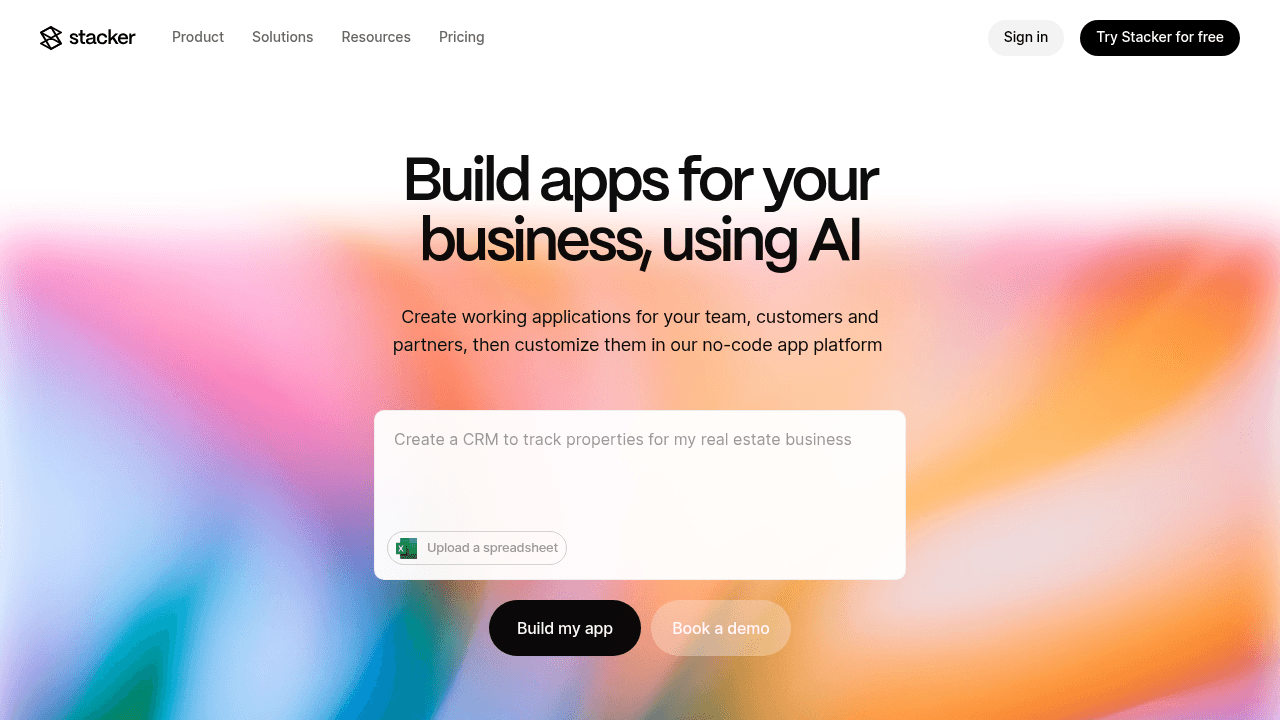
Stacker is a no-code builder with integrated AI that lets non-technical users create custom business applications, internal tools, and secure portals. Unlike Lovable, which generates raw code that requires debugging, Stacker builds applications on a managed structure. This approach keeps software stable, maintainable, and safe for critical business workflows.
What they offer:
AI App Builder: Generates initial applications from plain-English prompts and applies changes instantly, delivering working software in minutes.
Built-in Database: Includes a relational database and syncs with Airtable or Google Sheets, offering scalable data management.
Granular Permissions: Role-based access controls designed for secureccustomer portals and partner apps.
Visual Editor: Simple drag-and-drop interface that makes applications easy to update without breaking functionality.
Good for: SMBs in niche industries, enterprise departments that need custom workflows, and teams building CRMs, process trackers, or external portals where non-technical owners must stay in control.
Limitation: Stacker is optimized for business apps, internal tools, and portals versus public-facing marketing sites or highly bespoke consumer apps that require custom front-end code and design from scratch.
Bottom line: Stacker is the best Lovable alternative because it offers the speed of AI creation without the fragility of generated code. You get maintainable business software with strong data handling, real portal capabilities, and permissions that work for both internal teams and external users.
Noloco
Noloco is a no-code tool that builds applications and portals on top of Airtable. It uses a spreadsheet-first approach where users connect data to generate interfaces.
What they offer:
Fast portal generation from existing Airtable bases.
Pre-built UI components for displaying data.
User authentication and role-based access controls.
Best for: Teams invested in Airtable who need a simple frontend.
Key limitation: It relies heavily on spreadsheets, which become difficult to manage for complex systems. It lacks a first-class database layer, limiting scalability.
Bottom line: Noloco works for basic Airtable-based portals, but Stacker offers a dedicated data layer for serious business systems.
Airtable
Airtable is a spreadsheet-database hybrid used to organize and store data. It offers interface features layered on top to create custom views.
What they offer:
Flexible data organization with relational capabilities.
Interface designer for creating views and forms.
Automations for basic workflow triggers.
Best for: Teams that need a sophisticated spreadsheet for organizing data.
Key limitation: Interfaces feel secondary and are not designed for daily workflow management by external users. Portals are often too expensive for client use.
Bottom line: Airtable excels at storing data. Stacker connects to that data but provides actual business software with multi-role UI.
Glide
Glide creates web and mobile applications from spreadsheets like Google Sheets, focusing on polished interfaces and quick setup.
What they offer:
Fast app creation from Google Sheets.
Visually appealing templates and UI components.
Mobile-responsive progressive web apps.
Best for: Simple utility apps like inventory checkers or directories where visual appeal matters more than logic.
Key limitation: It carries the DNA of a mobile app powered by simple spreadsheets, making it unsuitable for business management systems.
Bottom line: Glide creates beautiful utility apps. Stacker is better suited for real workflow systems with true database capabilities.
Softr
Softr focuses on creating simple websites and client portals from Airtable, targeting makers and startups needing fast prototypes.
What they offer:
Pre-built blocks for rapid site assembly.
Easy connection to Airtable.
Quick deployment for public sites.
Best for: Founders needing quick prototypes or basic customer-facing pages.
Key limitation: It is limited when building deep internal tools and is not designed for managing complex, daily business workflows.
Bottom line: Softr works for prototypes and content sites. Stacker is the superior choice for internal software like CRMs and operations management tools.
Feature Comparison: Lovable vs Top Alternatives
Deciding between code generation tools and managed no-code environments changes your long-term maintenance and data strategy. Lovable provides raw code, which offers flexibility but requires you to manage infrastructure, security updates, and bug fixes yourself.
Managed tools handle the technical overhead, allowing you to focus on workflows and user access instead of deployment and patching. The table below features the structural differences between Lovable’s code-generation approach and the managed environments of other leading options.
Feature | Lovable | Stacker | Noloco | Airtable | Glide | Softr |
|---|---|---|---|---|---|---|
AI App Generation | Yes (Generates Code) | Yes (AI App Builder) | No | No | Limited | No |
Data Structure | Via Supabase | Native Relational Database | Connectors | Spreadsheet-based | Google Sheets | Airtable/Sheets |
External Portals | Limited | Native Portal Features | Basic | Very Limited | Limited | Basic |
Permission Levels | Basic | Granular (Field & Table) | Basic | Limited | Basic | Basic |
Code Ownership | Yes | No (Visual No-Code) | No | No | No | No |
Maintenance Load | High (Self-Hosted Code) | Low (Fully Managed) | Moderate | Moderate | Moderate | Limited |
Why Stacker Is the Best Lovable Alternative
Stacker is one of the most reliable Lovable alternatives for teams that need stable, maintainable business software instead of prototypes. While Lovable generates raw code that often requires technical intervention or expensive credits to fix, Stacker runs on a managed foundation, so operations teams can modify workflows safely without fear of breaking the underlying application.
Stacker is designed to power business operations end-to-end. It connects directly to your data sources (like Airtable, Google Sheets, or SQL databases) and lets you create usable tools immediately, with AI handling the first build and a visual editor supporting ongoing changes.
Why Stacker is a strong alternative to Lovable:
No Code Maintenance: You never deal with raw code files. Updates happen through a visual interface, which removes the technical debt associated with AI-generated code.
Granular Permissions: Strong user roles let you share specific data securely with internal teams or external partners, something raw code exports rarely provide out of the box.
Operations Focus: You can build complete systems such as client portals, inventory trackers, and custom CRMs that support daily business functions reliably.
Recent analysis lists Stacker among the best no-code app builders because it combines AI speed with stability and ease of use for non-technical teams.
Final Thoughts on Selecting a Lovable Alternative
Choosing between Lovable and managed no-code tools comes down to your technical resources and timeline. If you have developers ready to refine AI-generated code, Lovable offers flexibility and full ownership of the codebase. If you need reliable business software without the technical overhead, Stacker gives you that stability out of the box so you can connect your data and build internal tools or portals without worrying about breaking changes.
FAQs
Why do teams look for alternatives to Lovable?
Teams usually look elsewhere when Lovable’s credit-based pricing becomes unpredictable for complex projects or when they lack the coding skills to debug and maintain AI-generated code. It works well for quick prototypes but often needs developer intervention to reach production-ready stability.
When should you consider switching from a code-generation tool to a no-code tool?
Consider switching when you’re spending a lot of time debugging AI-generated code, when credit costs exceed flat-rate subscription budgets, or when non-technical team members need to change the application safely without breaking functionality.
What features should you focus on when comparing Lovable alternatives?
Focus on data management (built-in database vs. spreadsheet reliance), permission controls for external users, maintenance requirements, and whether the tool provides a managed infrastructure or expects you to handle hosting and security yourself.
Can you build secure customer portals with AI code generators like Lovable?
It is possible, but AI code generators lack native portal features like granular role-based permissions and secure external user management, so you must implement them in code. Tools built for portals (such as Stacker or Noloco) offer these controls out of the box, which reduces security risks and development time.
How does Stacker's AI app builder differ from Lovable's code generation?
Stacker’s AI builds applications on a managed no-code infrastructure, so changes happen through a visual interface without touching raw code. Lovable generates editable source code that you own but must maintain yourself, requiring coding knowledge to fix bugs or add complex logic that the AI might miss.