6 MIN READ
Friday, January 9, 2026


Michael Skelly
Founder, Stacker
If you're searching for Noloco alternatives, you’ve probably hit the limits of building on top of Airtable or Google Sheets. The moment you need complex relationships, field-level permissions, or affordable external portals, you start looking around. We created Stacker to bridge that gap by giving you a proper relational database and the flexibility to build apps that actually scale with your business.
TLDR:
Noloco builds interfaces on spreadsheet data, but lacks native database depth for complex workflows.
Stacker offers AI-driven app building with a built-in SQL database for scalable business processes.
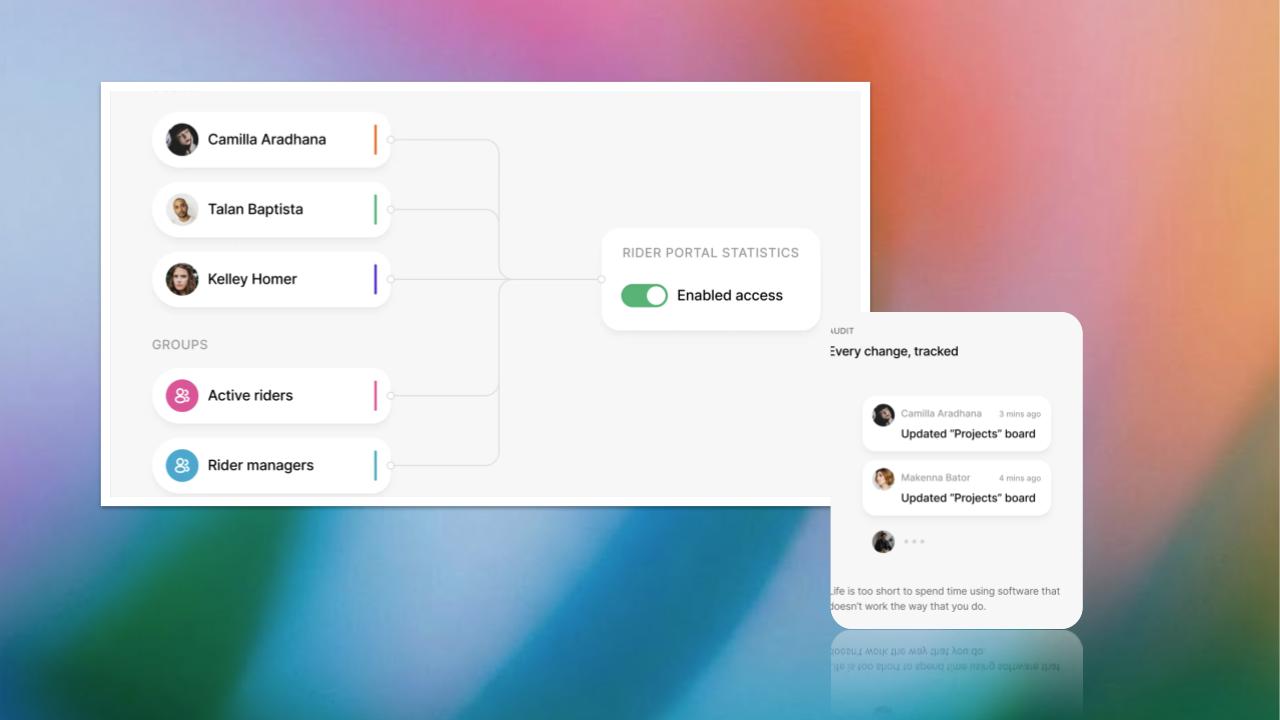
You get granular field-level permissions and secure portals for external users in one product.
Airtable charges $120–150/month for 15 portal seats; Stacker provides more affordable external access.
Stacker combines AI generation with managed infrastructure so you avoid code maintenance risks.
What is Noloco and How Does It Work?
Noloco helps businesses build custom internal tools and client portals by layering a user interface over existing data. You connect sources like Airtable, Google Sheets, or SQL databases directly to the software, or use the native database if you don’t have an external source.
The builder supports relational data models, letting you link records across tables to create structured workflows. You design screens, configure forms, and organize layouts through a visual drag-and-drop editor, and permission settings give you control over what internal team members or external clients can view and edit.
Agencies and small businesses often choose Noloco for its external user pricing model. It can be a budget-friendly option for client portals where you need to invite numerous guests without high per-user costs.
Why Consider Noloco Alternatives?
Noloco works for simple internal tools connected to spreadsheet data and offers a straightforward way to add permissions to an Airtable base. However, architectural limits often push scaling businesses to look at other options.
Spreadsheet Dependencies
The software builds interfaces on top of sources like Airtable. Your data architecture ends up tied to spreadsheets instead of a dedicated application database, which can be fragile for multi-entity systems or complicated relational structures.
Customization and Scope Limits
Design flexibility is another friction point. Users often find branding options restrictive, and the system lacks controls like detailed audit logs. The product is geared toward internal tools and does not support richer external client-facing apps, so teams that need both internal and external experiences often start searching for alternatives.
Best Noloco Alternatives in January 2026
If Noloco feels limiting, other tools offer stronger data architecture and better support for external users.
Stacker (Best Overall Alternative)
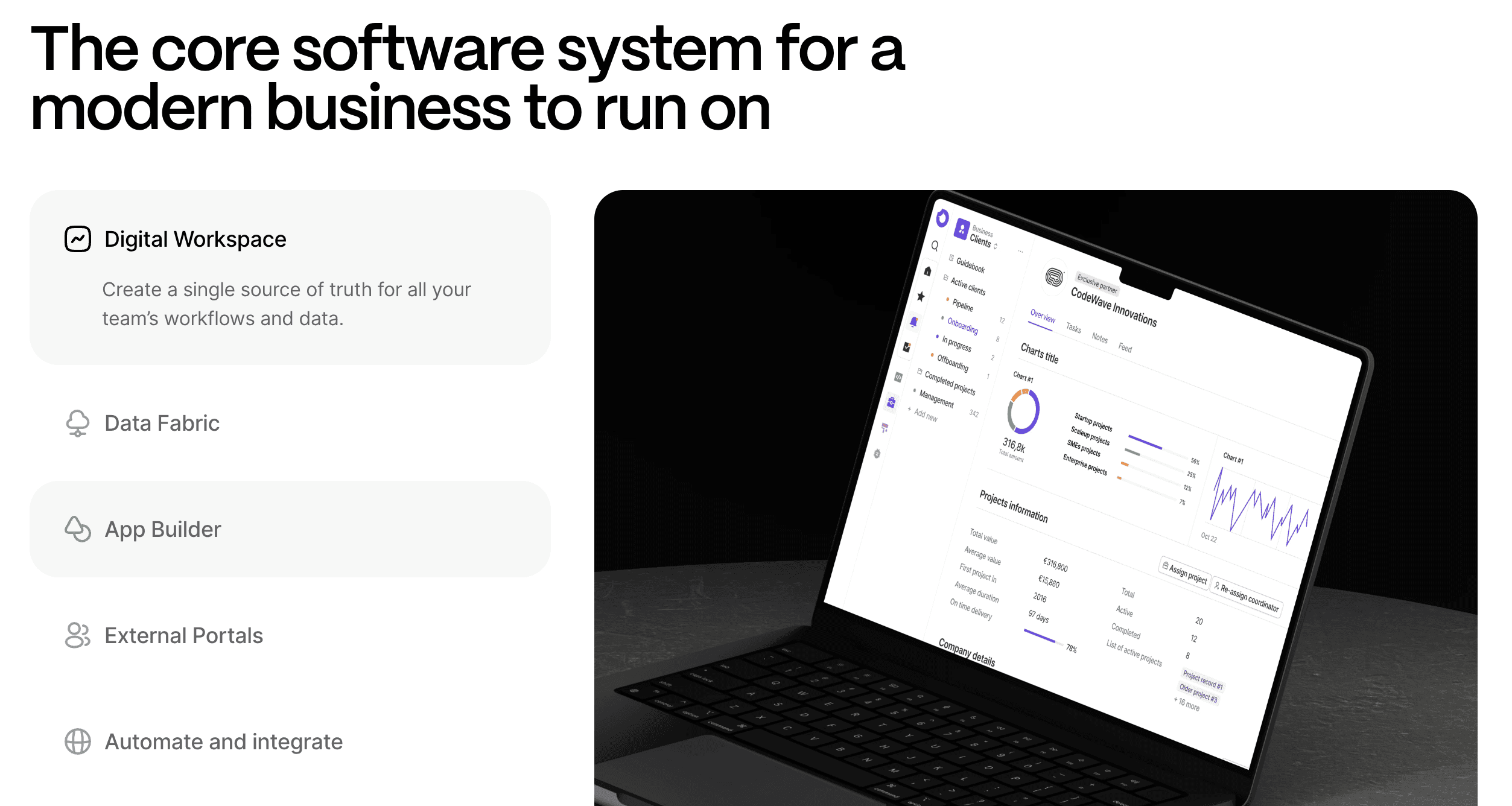
At Stacker, you build custom software without code. Our AI builder generates working apps from plain-English prompts. We sync with data sources like Airtable and Google Sheets and also provide a built-in SQL database so you avoid the row limits and performance lags common in spreadsheet-driven tools.
What they offer:
AI builder that generates and modifies apps via natural language.
Built-in SQL database that handles complex data relationships.
Granular permissions at field and table levels.
Secure portals for customers, clients, and vendors.
Good for: SMBs and internal enterprise teams that need serious internal tools, CRMs, process trackers, and portals built on a stable database instead of spreadsheets.
Limitation: Stacker is designed for business tools and portals, not for highly customized public marketing sites or consumer apps that require bespoke front-end code.
Bottom line: Stacker ranks as the top Noloco alternative because it combines a secure data layer with deep portal features, letting you run critical processes on real business software instead of a thin layer on top of spreadsheets.
Airtable
Airtable acts as a spreadsheet-database hybrid. It organizes internal data through linked records and views but functions primarily as backend storage.
What they offer:
Spreadsheet interface with relational capabilities
Interface Designer for building dashboards
Native integrations with Slack and Google Workspace
Good for: Teams that need a powerful spreadsheet to structure data and simple views for internal users.
Limitation: Portals are expensive, often around $120–150 per month for just 15 seats, and the app experience is limited for daily client-facing workflows.
Bottom line: Airtable is excellent as a data store. Stacker connects to that data and turns it into a secure working tool with affordable external access and multi-role interfaces.
Glide
Glide turns data from Google Sheets, Excel, or Airtable into apps and defaults to mobile-friendly designs, which suits field teams that live on their phones.
What they offer:
Converts spreadsheet data into mobile and web apps.
Mobile-first responsive design.
Progressive Web Apps (PWAs) that can work offline for field tasks.
Good for: Teams building utility apps, field tools, stock checkers, and mobile-focused dashboards where visual polish and quick launch are important.
Limitation: Native App Store publishing is not standard, and the tool leans on spreadsheet models, which limits scalability for complex business logic and multi-role systems with deep permission needs.
Bottom line: Glide builds polished mobile apps quickly. Stacker gives you the stronger data architecture and secure user roles needed for business-critical operations and full external portals.
Softr
Softr operates as a block-based builder that constructs web apps from Airtable or Google Sheets data. As one of the more accessible Noloco alternatives, it focuses on speed, allowing users to assemble client portals and internal tools using pre-made blocks instead of granular design elements.
What they offer:
Block-based builder that assembles lists and forms without design skills.
Native integrations that sync directly with Airtable and Google Sheets.
Pre-set templates for directories and member sites.
Good for: Public websites, client-facing portals, and rapid prototyping.
Key limitation: It lacks the deep permission controls and logic needed for secure internal tools. You rely on external sources to define your data structure.
Bottom line: Softr suits external sites. Stacker provides the granular security and logic required for scalable business processes.
Lovable
Lovable uses AI to generate web app code from text prompts.
What they offer:
AI-driven code creation based on conversational descriptions.
Instant visual previews to validate concepts.
Full code export that developers can customize.
Good for: Visualizing product ideas and creating fast demos.
Key limitation: It produces raw code, not a managed system. You must handle hosting, security, and maintenance, which creates risk for daily business use.
Bottom line: Lovable helps prototype code concepts. Stacker offers a secure, code-free infrastructure for running reliable business tools.
Feature Comparison: Noloco vs Top Alternatives
Looking at these tools side by side makes the differences in database handling and external access very clear. Many options provide basic app building, but they diverge once you look at permissions and pricing for external users.
Feature | Noloco | Stacker | Airtable | Glide | Softr | Lovable |
|---|---|---|---|---|---|---|
Built-in Database | Yes (Noloco Tables) | Yes (relational) | Yes (spreadsheet-based) | Yes (Glide Tables) | Yes (native database) | No (generates code) |
AI App Builder | Basic | Advanced (iterative) | No | No | No | Yes (code generation) |
External Portals | Yes | Yes (core feature) | High cost add-on | Limited | Yes (basic) | No |
Airtable Sync | Yes | Yes (two-way) | Native | Yes | Yes | No |
Permissions | Yes | Granular (field/record) | Basic workspace access | Yes | Basic | No |
Mobile Support | PWA | Responsive web | Responsive web | PWA | Web-based | Code dependent |
Workflows | Yes | Yes | Yes | Business plan+ | Yes | No |
Why Stacker is the Best Noloco Alternative
Noloco is a valid starting point for teams comfortable with spreadsheets, but growing businesses usually need stronger infrastructure and data control. We built Stacker to sit between simple data wrappers and enterprise-grade software.
Instead of leaning on a connected spreadsheet, Stacker provides native relational tables that keep data consistent, so you can build complex systems without running into row limits or sync failures. According to recent research, the average company using no-code platforms avoids hiring two IT developers and realizes $4.4 million in increased business value over three years.
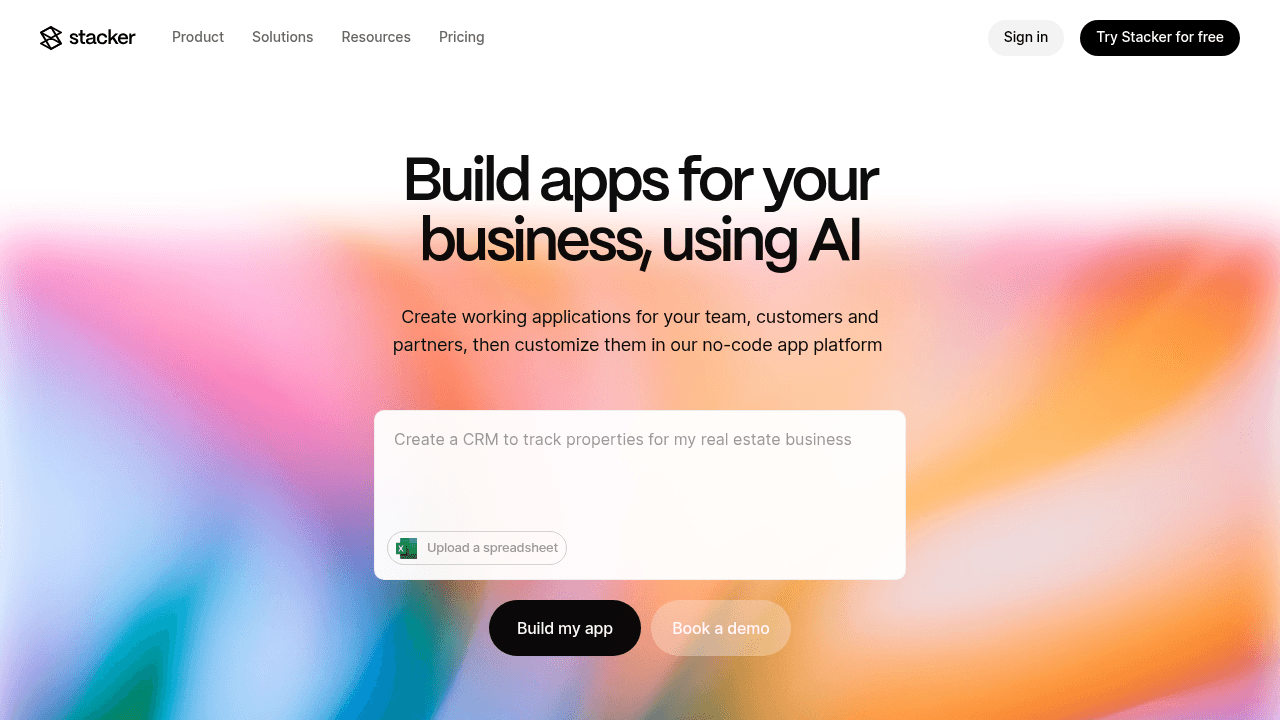
Implementation speed is a core focus. With our AI builder, you generate fully functional applications from plain English prompts and refine them by asking the AI to add fields or adjust layouts, which cuts down the time it takes to launch internal tools compared with manual-only builders.
Secure collaboration is another key strength. Many tools struggle to balance internal workflows with safe external access, but Stacker handles both in the same app. You can set permissions down to specific fields so clients or vendors see only what they need while your team works with the full dataset. As no-code app builders mature, being able to manage multi-stakeholder environments securely in one tool has become a must-have.
Final Thoughts on Noloco vs Other No-Code Tools
Comparing Noloco vs other builders shows how important data architecture is for scaling businesses. Stacker provides a relational database and field-level permissions that keep your processes secure as you grow. You can manage internal workflows and client portals in one place instead of juggling multiple tools. Look at what your business needs today and what it will need in six months, then choose the builder that supports both stages.
FAQs
When should you consider moving away from Noloco?
You should look at other options if you’re hitting spreadsheet row limits, need deeper permission controls for sensitive data, or want more design freedom than Noloco offers. Teams managing complex multi-entity systems or planning to scale beyond simple internal tools often outgrow its architecture.
What features should you focus on when comparing alternatives to Noloco?
Focus on a built-in relational database that doesn’t depend on external spreadsheets, field-level permissions for secure access, and pricing that supports external users if you need client or vendor portals. Handling internal workflows and external stakeholders in one system saves time and reduces tool sprawl.
Can I migrate my existing Noloco data to another tool?
Yes. Most alternatives like Stacker support importing data from Airtable and Google Sheets, which Noloco commonly connects to. You can sync your existing sources or migrate into a built-in database for better performance and reliability.
How does Stacker handle external users differently than Noloco?
Stacker was designed from day one to support secure portals for customers, vendors, and partners, with field- and record-level permissions. You control exactly what external users see and edit in the same app your internal team uses, without hitting prohibitive per-seat costs.
What’s the main difference between AI code generators and no-code tools for business apps?
AI code generators like Lovable output raw code that you must host, secure, and maintain, which adds ongoing technical work. No-code tools like Stacker give you managed infrastructure where AI builds apps on a stable base, so you keep flexibility without worrying about broken code or security gaps.