6 MIN READ
Friday, February 13, 2026

Michael Skelly
Founder, Stacker
You might be drawn to AI app builders because the promise is simple: describe the software you want, and an app appears. That sounds ideal, until you realize there is a big difference between quick, AI-written code that lives on someone else’s servers and a stable system your team can trust every day.
That choice is at the heart of the Base44 vs Stacker comparison. Base44 leans into speed and visual demos, while Stacker focuses on reliable, secure systems that teams can keep improving over time. This guide walks through how each tool handles AI, data ownership, external users, and long-term use, so you can decide which option actually fits your business.
TLDR:
Base44 generates apps from text prompts but keeps your backend on their servers with no export path.
Stacker offers AI-assisted setup with a visual editor, a relational data store, and full data portability.
Base44 fits rapid prototyping; Stacker supports production systems with detailed permissions for secure client and vendor portals.
Stacker connects to Airtable and Google Sheets with two-way sync while still letting you keep control of your business logic.
What is Base44?
Base44 is an AI‑driven tool that converts text prompts into working web apps. Instead of dragging components or writing code by hand, you describe what you need in plain English, and the system generates the data structure, backend behavior, and user interface.
This “vibe coding” approach lets you build software through conversation. Base44 bundles core pieces such as data storage, user login, and hosting in a browser-based environment, which makes it attractive for fast prototypes and MVPs that help you test a concept before you commit to a full build.
What is Stacker?
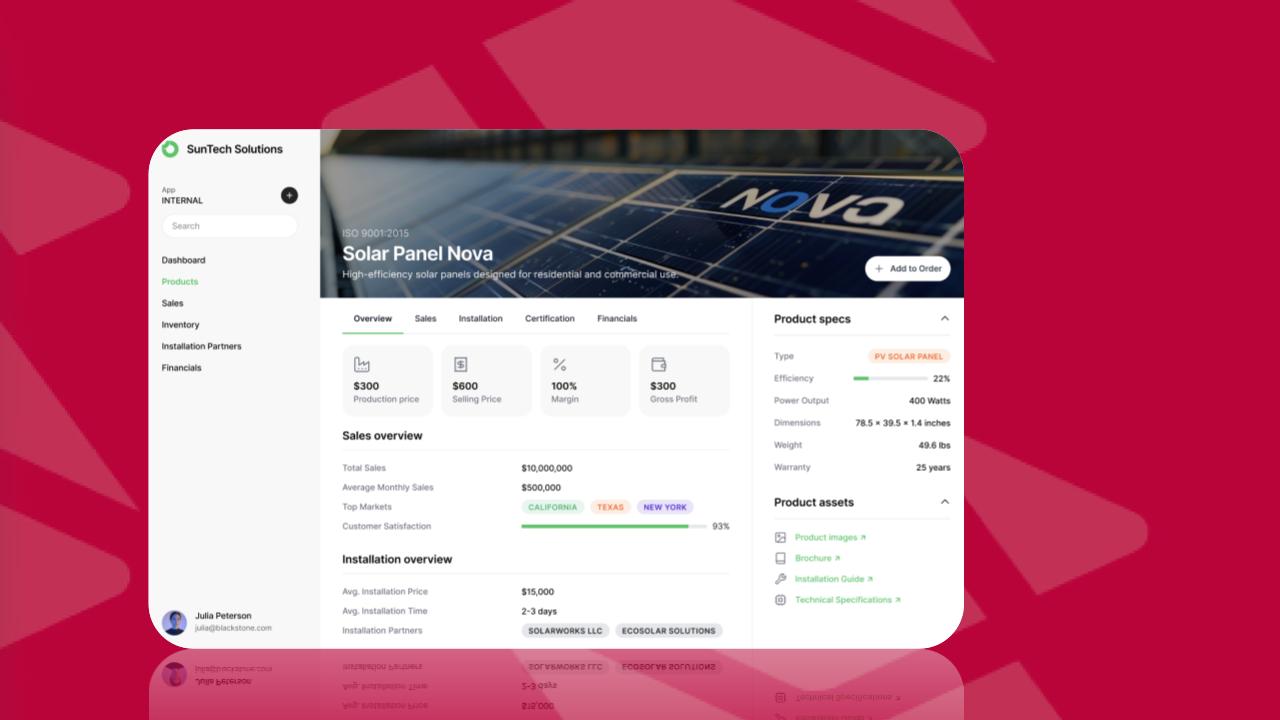
Stacker helps non-technical teams create custom software shaped to their real workflows. You do not have to squeeze your process into a one-size-fits-all product; instead, you design tools that are built for your exact needs, such as a partner portal, a CRM, or an inventory system.
Stacker is built to support day-to-day business use. It relies on a relational data store and detailed permission controls so you can decide which people see which records. That makes it safe to give external clients or partners access to exactly the right data without exposing your entire backend.
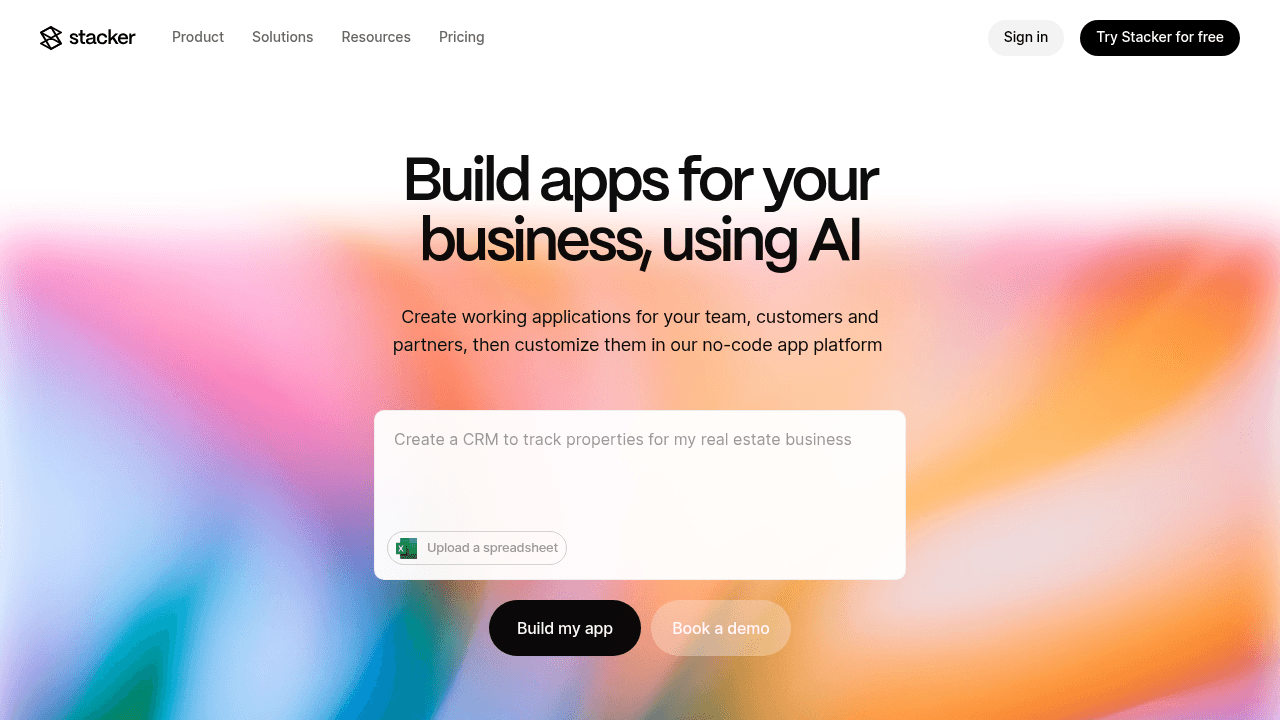
To speed up building, Stacker’s AI drafts an initial app structure based on your description. You then refine layouts, workflows, and rules in a visual editor so the result matches how your team actually works.AI-Powered App Generation and Long-Term Reliability
Both tools use AI to speed up the build process, but the long-term reliability of the software varies between the two.
AI-Powered App Generation and Long-Term Reliability
Both tools use AI to reduce setup time, but they do it in very different ways that matter once you move beyond a demo.
The AI app development market is expected to reach $221.9 billion by 2034, with more than 63% of mobile app developers now integrating AI features. Generative AI apps alone are expected to generate over $10 billion in consumer spending in 2026 and rank among the top five mobile app categories globally by downloads, revenue, and time spent, making the choice between AI approaches increasingly important for long-term success.
The Limits of Base44’s AI Generation
Base44 focuses on “vibe coding,” where prompts turn into code and visual prototypes very quickly. That can be impressive for early demos, but it creates challenges as logic becomes more complex. AI-generated code can miss hidden dependencies or misinterpret multi-step processes, which leads to bugs that are harder to diagnose.
On top of that, the credit-based model means every new version costs you. Each adjustment, bug fix, or layout change burns credits, so working through multiple AI runs to correct issues can become expensive while your backend remains tied to their environment.
Stacker’s Stable Architecture
Stacker uses AI to configure an existing, stable foundation instead of writing new code on the fly. The AI builder sets up tables, relationships, and access rules, and you fine-tune everything through a structured visual interface. You work with predictable building blocks instead of opaque scripts.
Key features like detailed access control and two-way sync are baked into the system, not bolted on as generated code. Your apps stay reliable as you make changes, without an ongoing cycle of regeneration and debugging.
Data Management and Database Architecture
The way each tool handles your data will determine how easy it is to switch tools or grow over time.
Base44’s Data Lock‑In
Base44 uses AI prompts to generate database schemas and backend logic. While that feels fast, it introduces a serious ownership issue. You can export frontend code to GitHub, but the backend and database stay on Base44’s systems.
If you decide to move away from Base44, you cannot take that backend with you. You would need to rebuild your server logic and data model somewhere else, which turns a tool that started as a shortcut into a long-term dependency.
Stacker’s Relational Database and Sync
Stacker includes a relational data store for reliable record keeping. You define fields, linked records, and access rules in a visual way, so you can see exactly how everything fits together.
You can also connect external sources like Airtable and Google Sheets and keep them in two-way sync. That keeps your data portable: your app logic lives in Stacker, but the records themselves remain accessible in formats and tools you already use, with no lock‑in on the backend.
Building Production Apps vs Prototypes
A key question is whether you are just testing an idea or supporting the work your business runs on every day.
Base44 for Rapid Prototyping
Base44 is tuned for speed and early validation. It shines when you need to build a proof of concept, a small demo, or a single-user MVP to show investors or stakeholders.
For complex business workflows, though, this approach runs into limits. The focus on generated code and fast iteration often leaves gaps around governance, audit trails, and detailed role control, which are important when multiple teams and external parties rely on the same system.
Stacker for Production Systems
Stacker is designed to run live business processes. Teams use Stacker to move from spreadsheets into production-ready tools, including custom CRMs, inventory tracking, and approval flows.
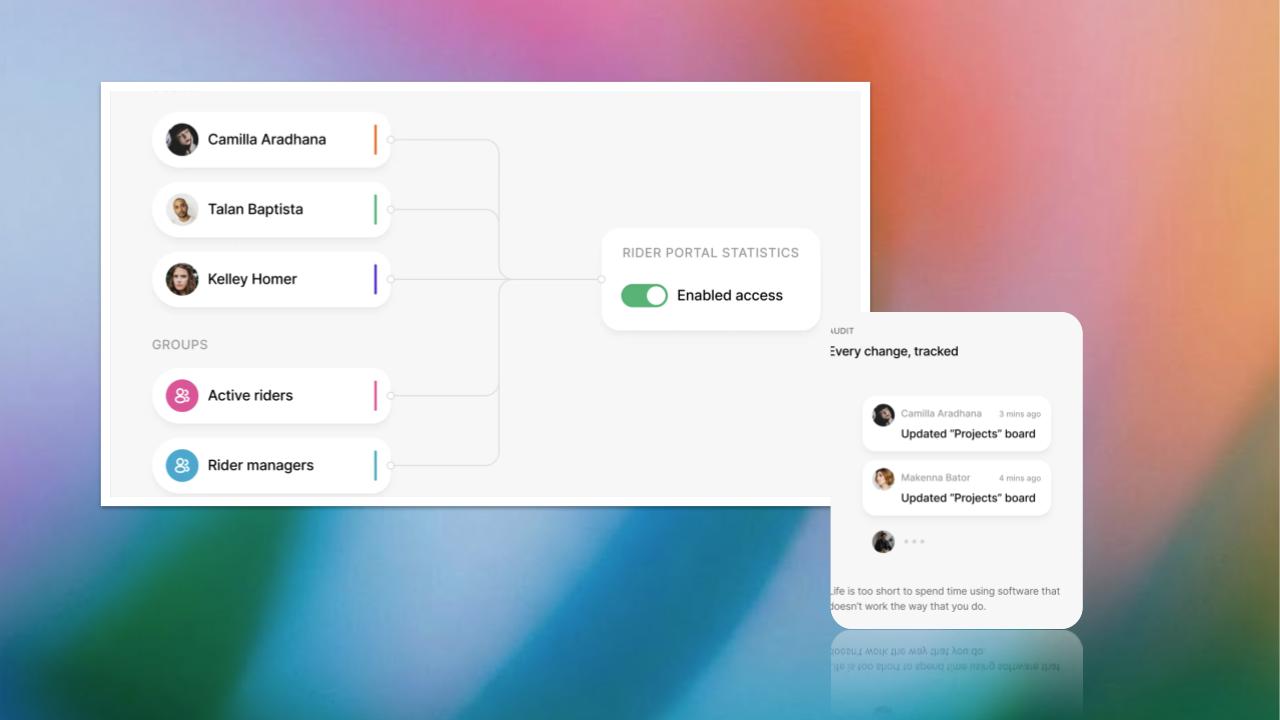
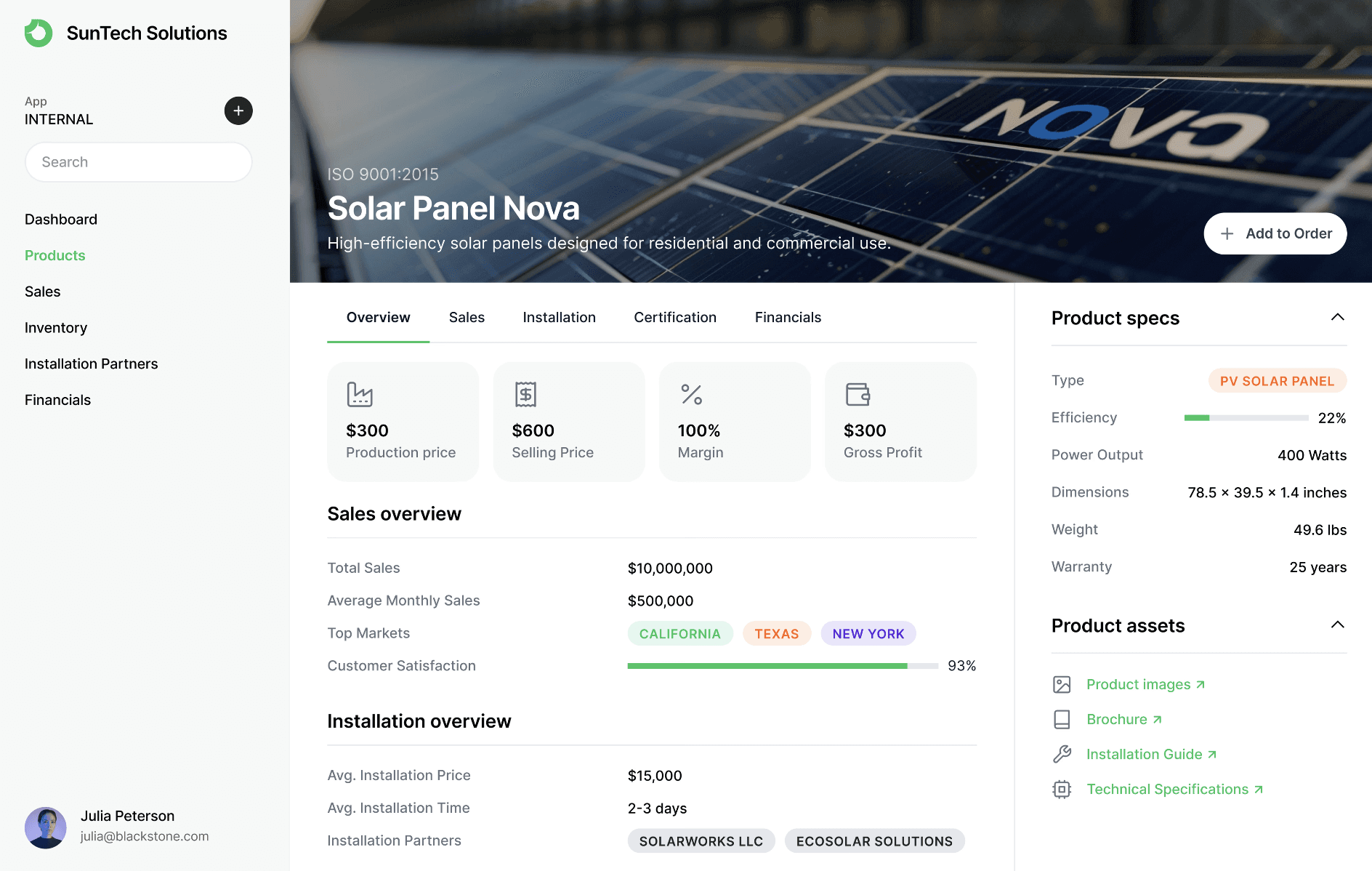
Security and access design sit at the center of this approach. You can define clear roles such as Admin, Vendor, and Client, and limit each to very specific data and actions. That lets you create secure portals where outside users can work with your system without exposing your full database.
Interface Customization and User Experience
How you shape the interface also matters, especially when different teams and external users depend on it.
Base44’s Conversational Styling
Base44 uses a text-based interface for design. You type instructions such as “make this button green” or “show this table in two columns,” and the system tries to interpret your request. This can be fun and quick when you are experimenting.
In practice, though, it often takes multiple tries to get precise layouts, because you are always guessing which phrasing the AI will understand. Each attempt consumes credits, so fine-tuning details can become costly and unpredictable.
Stacker’s Visual Component Library
Stacker takes a structured approach to design. It offers a library of pre-built components like Kanban boards, calendars, detail pages, and list views, all configured directly in a visual editor. You drag, arrange, and configure elements without needing the right “magic” prompt.
You can adjust branding, layout, and view types so each team sees exactly what they need. This gives you predictable control over the experience while still moving much faster than custom development.
Feature Comparison: Stacker vs Base44
Feature | Base44 | Stacker |
|---|---|---|
AI Approach | Generates raw code from text prompts ("vibe coding") for rapid prototyping | Uses AI to configure stable, pre-built infrastructure with visual editing |
Database Architecture | AI-generated schemas locked in their system; backend cannot be exported | Built-in relational database with full control over structure and relationships |
Data Portability | Frontend code exports to GitHub, but backend and database remain locked on their servers | Complete data ownership with optional two-way sync to Airtable and Google Sheets |
Best Use Case | Rapid prototyping, MVPs, single-user demos, and concept validation | Production systems, client portals, custom CRMs, and business tools |
Permission System | Limited governance and role management for multi-user scenarios | Granular role-based permissions allowing secure external user access to specific data |
Interface Customization | Conversational styling through text prompts; requires iteration and consumes credits | Visual component library with pre-built UI elements (Kanban, calendars, lists) and direct control |
Pricing Model | Credit-based system where every iteration, debugging attempt, and design tweak consumes credits | Subscription-based pricing with predictable costs for building and maintaining applications |
Maintenance Requirements | AI-generated code may miss dependencies or misinterpret workflows, requiring ongoing fixes | Stable architecture with native features that work correctly without constant code maintenance |
Why Stacker is the Better Choice
Base44 is a strong fit if your main goal is to show a concept quickly. If you need a single-user demo or a simple MVP to validate an idea, the speed of text-to-app generation can be appealing.
If you are supporting real teams and real customers, Stacker is the safer long-term choice. You keep ownership of data, work on a predictable architecture, and gain detailed control over how internal and external users interact with the system. That balance of AI speed and reliable structure is what you need when apps move from “interesting demo” to “part of the workday.”
Final Thoughts on Selecting Your App Builder
The Stacker vs Base44 decision comes down to one question: are you testing an idea, or are you running your business? Base44 is ideal for quick demos and experiments. Stacker is built for complex processes, detailed access rules, and data relationships that keep real operations running smoothly over time.
With Stacker, you can replace fragile spreadsheet workflows with software that reflects how your team actually works, without giving up control of your data or depending on AI-generated code that you cannot easily inspect or move.
FAQs
How should I decide between Stacker and Base44 for my business needs?
Choose Base44 if you need a fast prototype to prove a concept with a small group of users. Choose Stacker if you are managing live processes, external users, and data you cannot afford to lose or rebuild.
What's the main difference in how these tools handle backend data and databases?
Base44 uses AI to generate backend logic and stores it on their systems, with no export path for the backend if you leave. Stacker gives you a relational data store with visual control, plus optional sync to Airtable or Google Sheets so your data remains portable.
Can Stacker support external users like clients or vendors securely?
Yes. Stacker includes detailed role-based permissions that let you decide exactly which records and fields each user type can see. You can run client and vendor portals in the same app while still keeping sensitive data restricted.
What should I know about Base44's credit-based pricing model before starting?
Every regeneration, fix, or design tweak uses credits. If the AI misreads your prompt or you need several attempts to refine a workflow, your costs increase with each run.
Who is Stacker best suited for?
Stacker is suited to operations leaders, department heads, and business owners who want to digitize real processes. If you currently rely on spreadsheets or generic tools and need software shaped to your own workflow, Stacker will fit that use case.